
Baking powder is one of those pantry ingredients we often use without thinking too much about it — until we run out halfway through a recipe. Yet this simple white powder plays a huge role in how cakes rise, muffins become fluffy, pancakes turn soft, and biscuits develop their light texture.
Without baking powder, many baked goods would end up dense, flat, heavy, or rubbery. It’s one of the most important ingredients in home baking because it helps create lift, softness, and structure.
In this article, we’ll explore:
Whether you bake occasionally or every day, understanding how baking powder works can significantly improve your baking results.
Baking powder is a chemical leavening agent used to help baked goods rise.
It works by producing carbon dioxide gas bubbles when mixed with moisture and heat. Those tiny bubbles expand during baking, helping doughs and batters become lighter, softer, and fluffier.
Unlike yeast, baking powder works quickly and does not require time to ferment or rise. This makes it ideal for quick and convenient baking recipes.
That’s why baking powder is commonly used in:
Baking powder is especially important in recipes that do not use yeast, as it provides the lift and softness that yeast would normally create through fermentation.
Traditional baking powder usually contains three main components:
Most commonly cream of tartar.
Usually baking soda, also known as sodium bicarbonate.
Often cornflour/cornstarch.
The stabiliser helps absorb moisture and prevents the ingredients from reacting too early while sitting in the pantry. Commercial baking powders often contain additional anti-caking agents for the same purpose, similar to the additives used in icing sugar to keep it free-flowing.
When liquid is added, the acid and baking soda react together to produce carbon dioxide gas, which creates the bubbles that help baked goods rise.
The main purpose of baking powder is to create lightness, softness, and rise in baked goods.
Without it:
Baking powder works by creating tiny air pockets throughout the batter or dough. As the mixture heats in the oven, those pockets expand, helping baked goods rise and develop a lighter, softer texture.
Think of baking powder as a built-in lifting system for baking.
One of the biggest benefits of baking powder is the light texture it creates in baked goods.
It helps cakes, muffins, and other baked items rise evenly, producing a soft crumb and airy texture rather than a dense or heavy result.
This is why properly balanced baking powder can make the difference between a fluffy cake and one that feels compact or dry.
Unlike yeast, baking powder does not require proofing or rising time.
Once it is mixed into wet ingredients, it begins reacting almost immediately, helping batters and doughs rise quickly during baking.
This makes baking powder ideal for:
It allows you to make light, fluffy baked goods without the long preparation time associated with yeast-based baking.
When measured correctly, baking powder provides reliable and consistent results.
It helps baked goods rise evenly and produce a predictable texture each time, which is one reason it is used so widely in baking recipes around the world.
Baking powder is simple and easy to use, even for beginner bakers.
In most recipes, it is simply mixed through the dry ingredients before adding the wet ingredients and baking.
That simplicity is one reason baking powder is so popular in everyday home baking.
Some baked goods are meant to be light and soft without the flavour of yeast or the need for long fermentation times.
Baking powder allows baked goods to rise quickly while keeping the flavour neutral, making it perfect for recipes where you want a soft texture without a yeasty taste.
This works especially well in:
The science behind baking powder is actually quite simple.
When moisture is added, the acid and alkali in the baking powder react together. This chemical reaction produces carbon dioxide gas.
These tiny gas bubbles become trapped inside the batter or dough.
As the mixture heats in the oven:
This process is what creates the light, soft texture in many baked goods.
There are two main types of baking powder used in baking: single-acting and double-acting baking powder.
Single-acting baking powder reacts immediately once liquid is added.
Because the reaction starts straight away, the batter or dough needs to be baked quickly before too much of the gas escapes; the final baked goods may not rise properly.
Double-acting baking powder is the most common modern version used today.
It reacts in two stages:
This double reaction provides a more reliable rise and helps create a lighter, more consistent texture in baked goods.
Most store-bought baking powders are double-acting.
Homemade baking powder is incredibly easy to make using simple pantry ingredients.
Many people prefer homemade versions because they can avoid unnecessary additives, anti-caking agents, and aluminium-based ingredients often found in some commercial baking powders.
Cornflour helps absorb moisture and prevents clumping during storage. Commercial baking powders often contain additional anti-caking agents for the same purpose, similar to the ingredients added to icing sugar to keep it free-flowing. Some commercial baking powders also contain aluminium-based compounds, which help create a more stable double-acting reaction and extend shelf life.
If you are using your homemade baking powder immediately, you can leave out the cornflour.
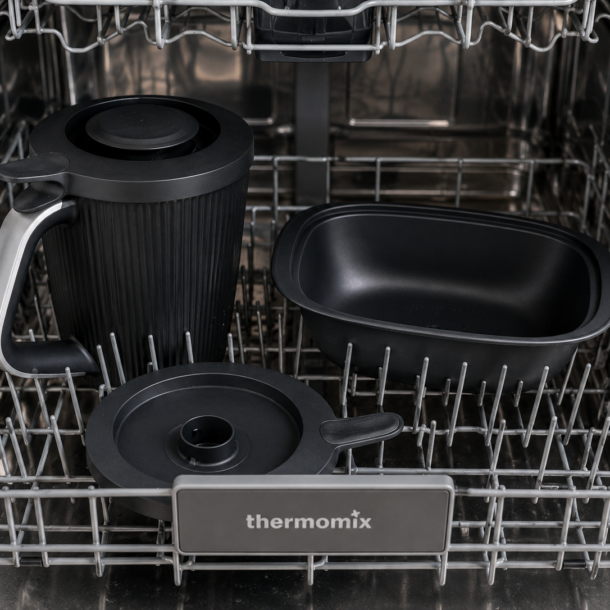
Place all ingredients into the Thermomix bowl and mix:
10 sec/speed 4
Store in an airtight container.
Whisk all ingredients together thoroughly until completely combined.
Store in a dry, airtight jar.
Many people prefer homemade baking powder because:
Homemade baking powder is also incredibly useful when you unexpectedly run out of store-bought baking powder halfway through baking.
Homemade baking powder is best used within a few months for the strongest performance and most reliable rise.
To help maintain freshness, store it in a:
Moisture exposure can trigger the ingredients too soon and reduce the effectiveness of the baking powder over time.
Baking powder loses strength over time, especially if exposed to moisture or humidity.
To test whether it is still active:
If there is little or no reaction, the baking powder has likely lost its effectiveness and should be replaced.
Fresh baking powder helps create a better rise, lighter texture, and more reliable baking results.
More baking powder does not necessarily mean better results.
Using too much baking powder can cause the following:
Correct measurement is important in baking, as even small changes can significantly affect the final texture and flavour.
Using too little baking powder can also affect the final result.
It may lead to:
The recipe may still bake successfully, but the texture and lightness of the finished product can suffer significantly.
A general baking guideline is:
However, the exact amount can vary depending on:
Some recipes require slightly more lift, while others need less to achieve the correct texture and structure.
Usually:
This helps create a soft, even crumb and good rise.
Usually:
This gives muffins enough lift without becoming overly airy.
Usually:
Pancakes often use slightly more baking powder to create a lighter, fluffier texture.
Usually:
Scones typically use a higher amount of baking powder to create their classic lift and soft interior. Overmixing should also be avoided, as gentle handling helps keep scones light and tender.
Sometimes you may not have baking powder available when baking.
Thankfully, several simple substitutes can still help provide lift and lightness in your recipes.
This is generally considered the best substitute for baking powder.
Because baking powder already contains both an alkali and an acid, you can recreate a similar reaction by combining baking soda with an acidic ingredient.
For every 1 teaspoon of baking powder:
Use:
Possible acids include:
Self-raising flour already contains baking powder mixed through the flour.
As a general guide:
If using self-raising flour in a recipe, you can usually omit additional baking powder unless the recipe specifically requires extra lift or fluffiness.
In some recipes, whipped egg whites can help provide natural lift and lightness.
This works especially well in:
The air beaten into the egg whites expands during baking, helping create a lighter texture. However, whipped egg whites are not a direct replacement for baking powder in all recipes, particularly those that rely on chemical leavening for structure and rise.
Carbonation from club soda or sparkling water can provide a slight lift in pancakes and lighter batters.
This works best in:
The bubbles in the carbonated liquid help create a lighter texture, but it is not a complete substitute for baking powder in most baking recipes that require a stronger rise and structure.
Baking soda cannot be substituted directly for baking powder on its own.
Baking soda requires an acidic ingredient to activate properly. Without enough acid in the recipe:
This is one reason baking powder is often more convenient, as it already contains both the alkali and acid needed for the reaction.
Contains:
Needs only moisture to work.
Pure sodium bicarbonate.
Needs acid added separately.
Examples of acidic ingredients:
Some recipes use both baking powder and baking soda together.
Why?
Because they each serve slightly different purposes:
Using both can help improve:
This combination is common in recipes containing ingredients such as yoghurt, buttermilk, cocoa, or sour cream.
Old baking powder gradually loses its effectiveness over time, especially if exposed to moisture or humidity. If you are unsure whether it is still active, test it before baking.
Once the liquid activates the baking powder, the reaction begins immediately.
Overmixing can knock out the air bubbles created during the reaction, reducing rise and affecting texture. This is one reason scones are best handled as little as possible; gentle mixing helps keep them light, soft, and fluffy rather than dense or tough.
Batter is generally best placed into the oven soon after mixing.
Leaving it sitting for too long can reduce the effectiveness of the baking powder, as some of the gas produced may escape before baking.
Using too much or too little baking powder can dramatically change the texture and rise of baked goods.
Accurate, level measurements are important for consistent baking results.
Yes, baking powder is considered safe when used normally in baking.
Some people prefer aluminium-free versions because they dislike the slight aftertaste some brands may produce.
Homemade baking powder is best if you want simpler ingredients.
Baking powder may seem like a small ingredient, but it has a huge impact on successful baking.
It helps create:
Without baking powder, many cakes, muffins, pancakes, scones, and quick breads would turn out dense, flat, or heavy.
Understanding how baking powder works can also help you become a more confident baker because you begin to understand:
And perhaps best of all, baking powder is incredibly easy to make yourself using simple pantry ingredients.
Whether you use store-bought or homemade, fresh baking powder is one of the key foundations of light, fluffy, and reliable baking results.